Birmingham’s BTR market has been quietly growing and has now firmly established itself as the UK’s most compelling regional Build to Rent (BTR) market. The latest insights from JLL’s ‘Big Six Residential Development Report 2026’ reinforce this position.
With nearly 25,000 BTR homes either complete or under construction, and a further 15,000 in the pipeline, Birmingham is now the largest BTR market outside London. This is a story of growth, but also of structural change in how people live and how residential assets are managed.
In this blog, we will explore what’s driving Birmingham’s BTR growth, how the sector is evolving, and why operational expertise is becoming essential to the long-term success of an asset.
Birmingham: From Emerging Market to Market Leader
The pace of Birmingham’s growth in the UK BTR sector has been striking. Over the past year alone, the city’s development pipeline has grown by more than 30%, supported by approximately £370 million of investment. This represents a significant share of the £1.1 billion invested across the UK’s “Big Six” regional cities.
What’s particularly notable is that alongside established UK institutions, international investors, particularly from North America, are increasingly targeting Birmingham, drawn in by its combination of scale, affordability, and growth potential.
This level of sustained investment shows a clear shift – Birmingham is no longer an emerging opportunity, it is established and still scaling.
Strong Fundamentals leading to Long-Term Demand
Behind Birmingham’s BTR expansion lies a set of robust and enduring fundamentals.
Rental values in the city are forecast to grow by 18% by 2030, while capital values are expected to increase across the West Midlands by more than 20% over the same period. These projections highlight a region with a strong economy, a growing population, and plenty of job opportunities.
Birmingham retains around half of its graduates, meaning it supports a young, professionally active renter demographic, the largest target audience for BTR schemes.
There is still a significant housing shortage. The city is estimated to require over 100,000 new homes over the next two decades, creating a constant imbalance between supply and demand.
Both of these factors suggest a rental market that is not simply short-term, demand is here to stay, and BTR is helping to meet it.
From Buildings to Communities: The Evolution of BTR
As the sector matures, BTR is evolving. BTR is now fundamentally professional operational property management, dependent on service quality, resident experience, and sustainable engagement.
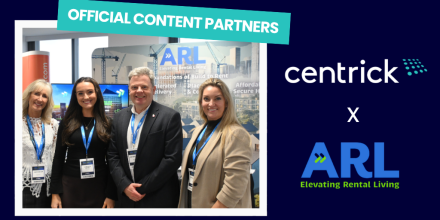
Key industry organisations, such as the Association for Rental Living (the ARL) a membership organisation representing and supporting the professionally managed rental housing sector, is helping to formalise this shift. Centrick has been a long term member and content partner and is fully engaged with the activities of the ARL. It provides research, sets best practice standards, and lobbies government on housing policy. Its insights are useful and present the rental market in an optimistic, investment-focused light.
Residents’ expectations are also rising. Today’s renters are not just seeking accommodation, but a lifestyle, one that includes high-quality amenities, responsive and professional management, and a real sense of community.
In short, the success of a scheme is no longer defined fully occupied, but over the course of its operation.
The Operational Challenge: Where Value Is Really Created
With rapid growth comes increasing complexity, and as Birmingham’s BTR pipeline expands, developers and investors face a new set of challenges:
- Achieving stabilisation in a more competitive market optimising NOI.
- Maintaining high occupancy levels and retention rates.
- Delivering a consistent, high-quality resident experience at scale.
Regulatory change, such as the Renters Rights Bill, is also shaping the landscape and placing greater emphasis on tenant rights, transparency, and professional standards – further reinforcing the importance of experienced operators.
Data is becoming another critical differentiator. Access to sector-wide insights, such as those being developed through ARL initiatives, is enabling more informed decision-making and performance benchmarking.
In today’s market, value isn’t just created through development – it comes from how well a scheme is managed over time. As the sector evolves, strong operational expertise is becoming the key difference between schemes that simply fill up and those that perform well long term.
As Jane Morcom, Group Business Director at Centrick, explains:
In today’s rental market, professional management is what turns buildings into communities – and communities into consistently performing assets.
A Market Entering Its Next Phase
Birmingham’s BTR story is entering a new phase. One that will be defined not just by growth, but by maturity.
Birmingham has firmly established itself as a leading regional market, underpinned by robust fundamentals. However, to ensure a sustained and vibrant BTR future, it is essential for the city to maintain its growth trajectory and uphold investor confidence. As the sector shifts towards a more professional, experience-focused approach, operational excellence will be key to securing long-term success.
For investors and developers, the opportunity remains significant – but so too does the need for the right expertise.
As BTR continues to scale, the role of experienced operators will become more important in securing long-term value and delivering the quality of living that residents expect.
Would you like to learn more about how Centrick can support your BTR or Asset management? Visit our BTR page HERE and leave an enquiry using the form below – our experienced team is ready to help.
Sources: