‘The Centrick Arms’ at UKREiiF 2026: ‘Planning Under Pressure’ Fireside Chat – Key Takeaways
The room was off the record, and the conversation was all the better for it.
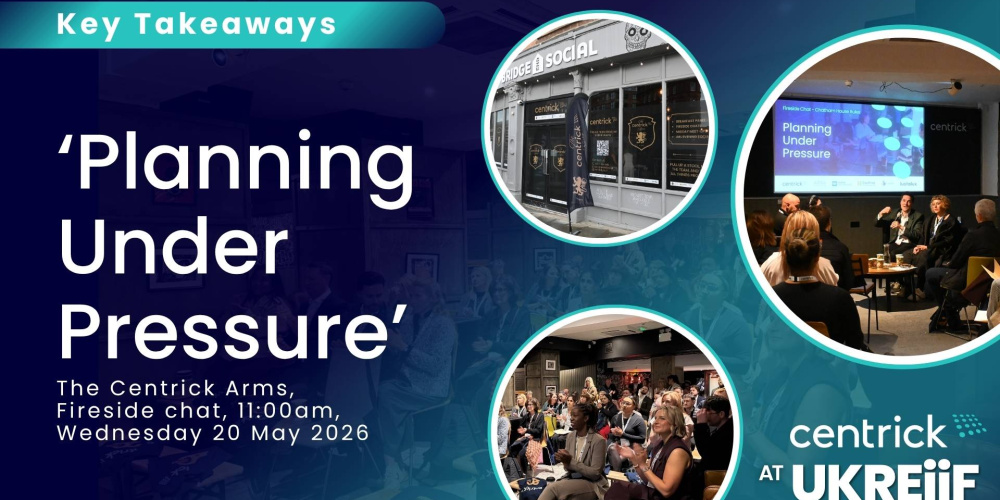
Centrick’s second fringe session of the morning brought together a panel spanning planning and design consultancy, residential development, project management and infrastructure, with Charles Lucas, Group New Business Director at Centrick, in the moderating chair. The question on the table was simple enough. What is actually stalling development right now, and what would genuinely unlock it?
The answer, as the discussion quickly established, is not simple at all.
The opening exchange set the tone. The challenge facing development right now is not one problem but many, compounding in ways that are difficult to plan around. Getting planning permission, one panellist noted early on, does not automatically mean a scheme is deliverable. The gap between planning consent and actual delivery remains wide, and it is widening for reasons that stretch well beyond the planning system itself.
When permission isn’t enough
Viability, the panel agreed, is arguably a bigger pressure than planning right now. Construction cost inflation, the requirements introduced by second staircases in higher-risk buildings, and stagnating revenues in a market where consumer confidence has softened have combined to reset project economics in ways that many schemes cannot absorb. Prices are expected to creep up again in the autumn. The pipeline that felt like it was getting back on track is under pressure again.
That said, planning itself is far from straightforward. Resourcing in local authorities, inconsistent policy interpretation and the gap between political aspiration and officer capacity are creating real delays on the ground. The planning reform agenda and the government’s emphasis on accelerating delivery are noted, but the sector’s view is that staffing and skills shortages within local authorities make delivery of that ambition challenging in practice.
One theme that surfaced repeatedly was leadership. Where development is moving, it tends to move because of individuals who create conditions for collaborative working between developers, officers and communities. Manchester was held up as an example of what is possible when that leadership exists. The case for giving planning officers greater delegated powers to make recommendations and decisions based on their professional judgement, rather than routing everything through committee, found broad support in the room.
Start with infrastructure, not the application
The panel was equally direct on infrastructure. Whether connectivity, utilities or access, the lesson from those who have delivered complex residential schemes is consistent: the time to solve infrastructure problems is at the start, not once planning is granted and procurement is under way. The cost and programme pain of retrofitting infrastructure that was not planned for from day one is significant, and clients, the panel suggested, are not always honest with themselves about that risk at appraisal stage.
On the question of quality and professionalism in a system under pressure to move faster, the panel was measured. Speed and quality are not necessarily in conflict, but achieving both requires getting the right people into the room at the right moment, removing silos between disciplines, and beginning stakeholder engagement early rather than treating it as a box to tick later. One contribution pointed to the value of development frameworks that give communities a genuine voice and create the context for specific planning applications to move more quickly once they do come forward.
Advice for the Housing Minister
The session closed with a question that sharpened the conversation: if you were advising the housing minister tomorrow, what is the single change that would unlock the most delivery? The answers were pointed. A serious injection of capital investment, given the current cost of temporary accommodation to the public purse. Streamlined and less compartmentalised funding, particularly for schemes with a public benefit dimension. Investment in skills and training to ensure that the pipeline of capable people needed to deliver what the planning system approves actually exists. And a broader commitment to planning for the future rather than the present.
The mood in the room was not pessimistic, but it was clear-eyed. The system has real problems, the politics around housing remain difficult, and public perception of development has not shifted as far as it needs to. But the panel pointed to places where things are working, and the conclusion was that what those places have in common is less about policy and more about people: the right leadership, the right relationships, and a willingness to start the difficult conversations early.