
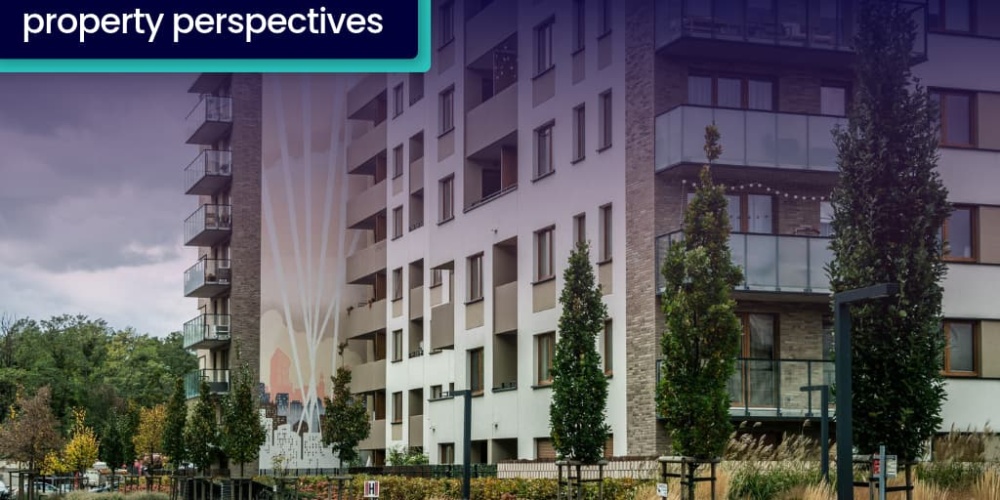
For our first guest edition of Property Perspectives, we sat down with Brendan Geraghty, CEO of the Association for Rental Living (ARL), to talk about the rise of the housing middle ground and what modern renters really want.
In Brendan’s view, the biggest thing holding rental living back isn’t what the sector builds. It’s the country’s perception of renters.
The forgotten middle
Brendan sees the housing middle ground as the forgotten middle.
“The wealthy have plenty of options. The disadvantaged have some support through social housing. But the people in the middle get forgotten,” he says. “In some ways this mirrors the education system. If you’re at the bottom of the class, you get help. If you’re at the top, you get encouragement. If you’re in the middle, you get very little.”
“A strong proportion of them will be renters,” he adds. According to the English Housing Survey 2024-25, 19% of households in England, around 4.7 million, now rent privately, and the sector has doubled in size since the early 2000s. And it isn’t just young people. The same survey shows that 18% of private renting households are now headed by someone aged 45 to 54, up from 14% a decade ago.
Yet nobody has measured what they need. “We know what the overall housing need is, but we don’t know what the rental need is. Why not?”
A second-class choice
For Brendan, there’s a deeper problem. Renting has never been taken seriously.
“There is a cultural illegitimacy associated with renting. If you’re a renter, you’re too often seen by some as a second-class citizen,” he says. “For the oldest democracy in the world to have an undemocratic bias as to the way housing is viewed is difficult to understand.”
That gap shows up in how people feel about their homes. The English Housing Survey found that 81% of private renters are satisfied with their accommodation, compared with 94% of owner occupiers.
He traces it back to two cultural imperatives: you must own your own home, and the nuclear family is the be-all and end-all. Anyone who doesn’t fit that picture is left with less choice.
The Renters’ Rights Act was a step forward. “It was a necessary piece of regulation, and I think the Government should be applauded in their intentions. But they haven’t done enough yet.” It looked at renters’ rights, he says, but not the wider supply of rental homes or how renters are seen.
His reminder to Westminster is simple. “The silent majority are also voters.”
Same family, different clothes
The irony, Brendan says, is that renting is where housing began. “Every form of home in the United Kingdom, and probably in the Western world, was born in the rental sector.”
From medieval tenant farmers to factory workers to student accommodation, renting has led the way. Ownership took those ideas and barely moved them on. “They have given us better-looking kitchens and bathrooms, but they haven’t really changed the product that was invented in the rental sector.”
Brendan doesn’t see renting and owning as rivals. “They’re from the same family. They’re just wearing different clothes. Why are we treating them so differently? It’s about the people who need homes. It’s not about the tenure of the assets.”
What Build to Rent proves
If the problem is perception, Brendan believes Build to Rent is the best evidence that renting can be different.
Has it changed minds yet? “Unfortunately, part of the answer is not enough, but we have to focus on what we have done.” He compares it to the early iPad, when nobody could see why they’d need one. “Once you’ve been in it and experienced it, you’re kind of hooked.”
What hooks people, he argues, is how they’re looked after. Looking back at ten years of the sector, Brendan and his peers asked who decided Build to Rent had to have amenity, and couldn’t find an answer. “We just slavishly followed what had been done in America.”
“What we realised is that amenity isn’t the definition of Build to Rent. Care and a positive experience is. Whether you’re in a high amenity building or a zero amenity building, it’s about how well you’re looked after and respected.”
The data backs him up. According to the HomeViews and Rightmove Build to Rent Report 2026, Build to Rent residents gave their homes a record rating of 4.60 out of 5 in 2025, the third record year in a row. The same report compared them with people renting new-build homes from private landlords. Since 2020, Build to Rent residents have rated their homes 9% higher overall, and 16% higher for how well they’re managed.
He saw that first-hand when his daughter chose a Build to Rent home while studying for her master’s. She paid a little more, but scrutinised the value and chose it for the care and her confidence in the landlord.
Earning trust
The experience is there. The problem is that most people never get to see it. “Our education campaign is erratic and uncoordinated, and policymakers are still struggling.” Local authorities, communities and renters themselves often still don’t understand what Build to Rent is.
And the stigma makes it harder. “It already starts from the back foot, because who wants to be known as a renter?”
For Brendan, the answer is trust. “That’s what we really need to work on: confidence and trust.” It’s the thinking behind the Build to Rent Alliance Code of Practice, an initiative spearheaded by the ARL “That’s fundamentally a trust document. It’s about getting government to trust us as a sector, and getting the consumer to trust us because they know what to expect from us.” Brendan expects the first early adopter signatories in Q1 2027.
There’s a commercial case too. “Happy people give you money,” Brendan says. “And if you keep them happy, they’ll keep giving you money.” Now that the Renters’ Rights Act has removed many of the landlord’s protections, he adds, retention depends more than ever on a positive experience.
Our day will come
Changing a culture takes time, and Brendan’s message to developers, investors and operators is not to lose heart.
“Don’t give up because things are challenging at the moment, and they will be challenging for a while. We have a really important job to do, and we need to do it well. Slowly but surely we will change minds and we will change hearts, and we will show the value of this sector to society at large. In doing so, we will also change the cultural perception of renting.”
“Our day will come. It’s already started. The most important thing is for us to show leadership, show commitment and show a willingness to adjust that delivery to the needs of the people, first and foremost. The returns will come on the back of that.”
For developers, investors and operators, the lesson is clear. Winning hearts and minds won’t come from amenity alone. It will come from understanding what residents value and putting care at the heart of both the product and how it’s run.
About the Association for Rental Living
The Association for Rental Living (ARL) is the voice of the Rental Living sector. It represents around 300 corporate members, including investors, developers, operators, suppliers and advisors, and works to raise standards for residents and champion the sector with government and policymakers. Find out more at thearl.org.uk
About Centrick
At Centrick, we manage Build to Rent communities on behalf of developers and investors across the UK, with resident care at the centre of how we operate. You can find out more about our BTR services here or speak to our experienced team by completing the form below.